Where Descent and Ascent Meet
What follows is not a teaching, conclusion, or explanation.
It is a reflection written from inside inquiry.
I’m sitting with Parashat Bo, with questions of Emunah and Bitachon, with descent and ascent, and with what redemption might mean when lived rather than discussed.
These are thoughts I’m walking with — not answers I’m offering.
I share them in the same spirit in which they were written: contemplation, listening, and alignment rather than instruction.
Bo — Come:
There is a moment in spiritual life when the question is no longer what to do, but where to stand.
This week’s Torah portion, Bo, begins with an unexpected word.
Not lech — go.
But bo — come.
“Come to Pharaoh.”
The Zohar asks the obvious question:
Why come and not go?
The answer has nothing to do with geography.
It has everything to do with where the work actually happens.
Descent without ascent becomes exile
Ascent without descent becomes escape
Redemption happens in their union
Pharaoh is not only a figure of oppression.
Pharaoh is uninfused physicality — a world experienced without light.
“Come to Pharaoh” is not a command to fight darkness from above.
It is an invitation to enter the place where light has not yet descended.
Redemption does not occur because we pray more, study more, or rise higher.
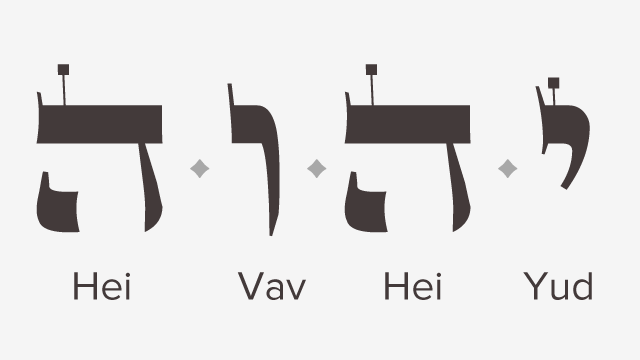
It occurs when the upper world (Yud–Hei) is unified with the lower world (Vav–Hei).
Not in theory.
In life.
Emunah and Bitachon — orientation and embodiment
I have been sitting with two words that many of us use interchangeably, but which feel very different when lived:
Emunah — faith, orientation, trust in the map
Bitachon — embodied security, nervous-system knowing, lived trust
Emunah tells us there is a unity.
Bitachon is what it feels like when the body no longer panics at uncertainty.
You can have Emunah without Bitachon.
Many of us do.
Bitachon is not confidence.
It is not certainty.
It is alignment.
And alignment is not achieved by effort.
It emerges when something deeper settles.
The Memutzah — the bridge that can connect or divide
In Kabbalah, a memutzah is an intermediary — a bridge between worlds.
Every true bridge is dangerous.
It can connect… or it can replace.
A teacher can be a memutzah.
A practice can be a memutzah.
Even prayer can become a memutzah.
When the bridge becomes a substitute, it separates.
When it remains transparent, it unifies.
This is why the tradition warns us again and again:
Do not stop at the intermediary.
Da’at — the knowing that descends
I am beginning to sense that Da’at is not just “knowledge,” but the capacity to let knowing descend.
Da’at is what ties understanding to the body.
It is the place where insight becomes inhabitation.
There is Da’at that points upward — cosmic, expansive, abstract.
And there is Da’at that points downward — practical, embodied, lived.
Redemption requires both.
When Da’at does not descend, spirituality floats.
When it descends without light, life feels heavy.
The work is not to escape the Vav–Hei.
The work is to infuse it.
Crown and Kingdom — the irony that reveals the truth
Keter is called Crown.
Malchut is called Kingdom.
This is not poetic irony — it is structural truth.
The Crown longs to be worn by the Kingdom.
The Kingdom is redeemed when it reveals the Crown.
Keter without Malchut is abstraction.
Malchut without Keter is burden.

Redemption is not climbing upward.
It is allowing what is highest to descend all the way into life.
“Bo” — not go, but come
“Come to Pharaoh” means:
Come into your work.
Come into your worry.
Come into your uncertainty.
Come into the cold places of life.
Not to conquer them.
Not to escape them.
But to bring light where it has not yet arrived.
This is not heroism.
It is intimacy.
A quiet realization
I am not praying for redemption anymore.
I am learning — slowly — to align with it.
To stand where heaven and earth touch.
To let descent and ascent meet.
To allow Emunah to become Bitachon — not by force, but by presence.
Perhaps redemption does not arrive with noise.
Perhaps it arrives when we finally stop dividing our lives into spiritual and physical —
and let them reunite.